
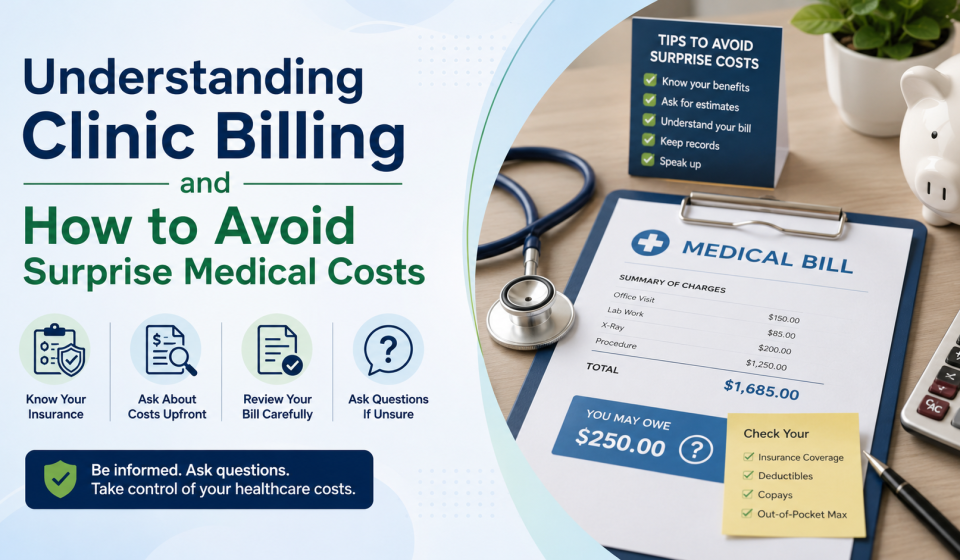

Learn how clinic billing works, common medical charges, insurance considerations, and practical tips to avoid surprise medical costs. A complete patient guide to understanding healthcare bills and managing expenses effectively.
Medical bills can often be confusing for patients. Many people visit a clinic expecting a simple consultation fee, only to receive additional charges for tests, procedures, medications, or specialist services. Understanding clinic billing can help patients make informed healthcare decisions and avoid unexpected expenses.
Healthcare costs continue to rise, making it important for patients to understand how clinics calculate charges and what steps they can take to prevent surprise medical bills. Whether you are visiting a family clinic, specialist center, urgent care facility, or multispecialty hospital, knowing how billing works can save you money and reduce stress.
This guide explains clinic billing, common medical charges, reasons for unexpected bills, and practical ways to avoid surprise healthcare costs.
What Is Clinic Billing?
Clinic billing is the process healthcare providers use to charge patients for medical services. After a consultation, treatment, diagnostic test, or procedure, the clinic generates a bill that outlines the costs associated with the services provided.
A medical bill may include:
- Consultation fees
- Diagnostic tests
- Laboratory services
- Imaging services
- Procedure charges
- Medication costs
- Follow-up visit charges
- Administrative fees
Each clinic may have a different billing structure depending on the type of care offered and the healthcare system in which it operates.
Why Understanding Medical Bills Is Important
Many patients pay medical bills without reviewing the details. However, understanding your bill can help you:
- Identify billing errors
- Avoid duplicate charges
- Understand what services were performed
- Verify insurance coverage
- Plan healthcare expenses
- Prevent unexpected financial burdens
A clear understanding of healthcare costs allows patients to become active participants in managing their medical expenses.
Common Components of a Clinic Bill
Consultation Charges
This is the fee charged for meeting with a healthcare professional. The amount may vary depending on:
- General physician visits
- Specialist consultations
- Emergency consultations
- Follow-up appointments
Specialists often charge higher consultation fees because of their advanced training and expertise.
Diagnostic Testing Fees
Doctors may recommend tests to diagnose or monitor health conditions. These may include:
- Blood tests
- Urine tests
- Allergy testing
- Hormone testing
- Pathology services
Diagnostic services often represent a significant portion of medical expenses.
Imaging Charges
Imaging procedures help healthcare providers evaluate internal structures of the body.
Examples include:
- X-rays
- Ultrasounds
- CT scans
- MRI scans
- Mammography
Advanced imaging services generally cost more than routine diagnostic tests.
Procedure Charges
Minor procedures performed in clinics may involve additional fees.
Examples include:
- Wound care
- Biopsies
- Injections
- Vaccinations
- Skin treatments
- Minor surgical procedures
Patients should ask about procedure costs before treatment whenever possible.
Medication Costs
Clinics may provide medications during treatment or prescribe medicines to be purchased separately.
Medication expenses may include:
- Prescription drugs
- Injectable medications
- Vaccines
- Specialty treatments
What Causes Surprise Medical Bills?
Unexpected medical costs can occur for several reasons.
Additional Tests Ordered During Visits
A physician may determine that further testing is necessary after evaluating symptoms.
For example:
- Blood work
- Imaging studies
- Specialized screenings
These services may not have been included in the initial consultation estimate.
Specialist Referrals
Patients may be referred to specialists for advanced evaluation or treatment.
Additional costs may arise from:
- Specialist consultation fees
- Additional diagnostic testing
- Follow-up care requirements
Out-of-Network Providers
One of the most common causes of surprise bills is receiving care from providers outside an insurance network.
This can happen when:
- A clinic contracts with independent specialists
- Laboratory services are outsourced
- Imaging services are performed by external providers
Out-of-network services often result in higher patient expenses.
Emergency Care Situations
During urgent medical situations, patients may not have time to compare costs or verify insurance coverage.
Emergency care often involves:
- Rapid diagnostics
- Specialist intervention
- Additional procedures
These services can significantly increase total healthcare expenses.
Billing Errors
Mistakes can occasionally occur in healthcare billing.
Examples include:
- Duplicate charges
- Incorrect service codes
- Wrong patient information
- Unnecessary fees
Reviewing bills carefully can help identify and correct these issues.
How Health Insurance Affects Clinic Billing
Health insurance can reduce out-of-pocket expenses, but patients should understand how their plans work.
Important insurance terms include:
Deductible
A deductible is the amount a patient must pay before insurance begins covering eligible services.
Copayment
A copayment is a fixed amount paid for healthcare visits or services.
Coinsurance
Coinsurance refers to the percentage of costs shared between the patient and insurance provider after meeting the deductible.
Out-of-Pocket Maximum
This is the maximum amount a patient pays during a policy year before insurance covers eligible expenses at a higher rate.
Understanding these terms helps patients anticipate medical expenses more accurately.
Tips to Avoid Surprise Medical Costs
Ask for Cost Estimates Before Treatment
Before undergoing tests or procedures, ask the clinic for a detailed estimate.
Questions to ask include:
- What services are included?
- Are additional fees possible?
- What is the expected total cost?
- Does insurance cover these services?
Obtaining estimates can prevent misunderstandings later.
Verify Insurance Coverage
Always confirm whether:
- The clinic is in-network
- Specialists are covered
- Laboratory services are covered
- Imaging facilities are covered
A quick insurance verification can prevent substantial unexpected charges.
Request Itemized Bills
An itemized bill breaks down each service and charge.
Reviewing itemized statements helps patients:
- Understand charges
- Detect errors
- Compare services received
- Verify insurance payments
Never hesitate to request a detailed billing statement.
Discuss Alternative Treatment Options
In some situations, multiple treatment approaches may be available.
Patients can ask:
- Is there a lower-cost option?
- Are generic medications available?
- Can tests be performed at a different facility?
These discussions can significantly reduce healthcare expenses.
Keep Records of Medical Visits
Maintain copies of:
- Bills
- Insurance claims
- Prescriptions
- Referral documents
- Payment receipts
Proper documentation can help resolve billing disputes quickly.
Review Every Bill Carefully
Before making payment:
- Verify patient information
- Confirm services received
- Check insurance adjustments
- Look for duplicate charges
Careful review may uncover mistakes that save money.
Communicate with the Billing Department
If something seems unclear, contact the clinic’s billing department.
Ask for clarification regarding:
- Service codes
- Charges
- Insurance processing
- Payment plans
Most billing offices are willing to explain charges and discuss solutions.
What to Do If You Receive an Unexpected Medical Bill
Receiving an unexpected bill does not necessarily mean you must pay immediately without question.
Follow these steps:
Step 1: Review the Bill
Check:
- Date of service
- Provider information
- Services listed
- Insurance adjustments
Step 2: Compare With Insurance Statements
Compare the bill with your insurance explanation of benefits (EOB).
Look for:
- Coverage amounts
- Patient responsibility
- Denied claims
Step 3: Contact the Provider
Ask the provider to explain any unclear charges.
Request:
- Billing review
- Itemized statement
- Coding verification
Step 4: Appeal Insurance Decisions
If insurance denied coverage incorrectly, file an appeal according to your insurer’s guidelines.
Step 5: Discuss Payment Options
Many healthcare providers offer:
- Monthly payment plans
- Financial assistance programs
- Discount arrangements
Exploring these options can make healthcare costs more manageable.
The Role of Transparency in Healthcare Billing
Healthcare transparency helps patients understand costs before receiving treatment.
Modern clinics increasingly provide:
- Online cost estimates
- Transparent pricing information
- Insurance verification assistance
- Billing support services
Transparent billing practices improve trust between patients and healthcare providers while reducing financial surprises.
Sources
https://sl1nk.com/poc6q3e
https://l1nq.com/n5683e8
Conclusion
Understanding clinic billing is essential for managing healthcare expenses and avoiding unexpected medical costs. By learning how medical bills are structured, verifying insurance coverage, requesting cost estimates, reviewing itemized statements, and asking questions when necessary, patients can make informed financial decisions about their healthcare.
Being proactive before treatment and carefully reviewing bills afterward can significantly reduce the risk of surprise charges. As healthcare systems continue to evolve, informed patients are better equipped to navigate medical expenses and receive the care they need without unnecessary financial stress.
Frequently Asked Questions (FAQs)
What is clinic billing?
Clinic billing is the process healthcare providers use to charge patients for consultations, treatments, diagnostic tests, procedures, and other medical services.
Why do medical bills sometimes cost more than expected?
Additional tests, specialist consultations, imaging services, out-of-network providers, and billing errors can increase the final cost of medical care.
What is an itemized medical bill?
An itemized bill provides a detailed breakdown of every service, procedure, medication, and charge associated with your healthcare visit.
How can I avoid surprise medical bills?
Ask for cost estimates, verify insurance coverage, request itemized bills, review charges carefully, and communicate with the clinic’s billing department.
What should I do if I find an error on my medical bill?
Contact the clinic’s billing office immediately and request a review of the charges. Keep records of all communications and supporting documents.