

Wondering how often you should get a health check-up? Learn the recommended health screening schedule by age, benefits of regular check-ups, and tips to stay healthy with preventive care.
Many people visit a doctor only when they feel sick. However, preventive healthcare is one of the best ways to maintain good health and avoid serious medical conditions. Regular health check-ups help detect diseases early, monitor existing health conditions, and provide valuable insights into your overall well-being.
In today’s busy lifestyle, health problems such as diabetes, high blood pressure, heart disease, obesity, and stress-related disorders are becoming increasingly common. The good news is that many of these conditions can be prevented or managed effectively when detected early through routine medical examinations.
But a common question remains: How often should you get a health check-up? The answer depends on your age, gender, family medical history, lifestyle, and current health condition.
This guide explains the ideal health check-up frequency for different age groups and why regular screenings are important for long-term health.
Why Regular Health Check-Ups Matter
A health check-up is more than just a routine visit to the doctor. It provides a complete picture of your health and helps identify potential problems before symptoms appear.
Some key benefits include:
- Early detection of diseases
- Better management of chronic conditions
- Reduced healthcare costs in the long run
- Improved quality of life
- Personalized health advice
- Monitoring of risk factors such as cholesterol and blood pressure
For example, a person with high blood pressure may not experience symptoms for years. A routine health screening can identify the issue early and prevent complications such as heart attacks or strokes.
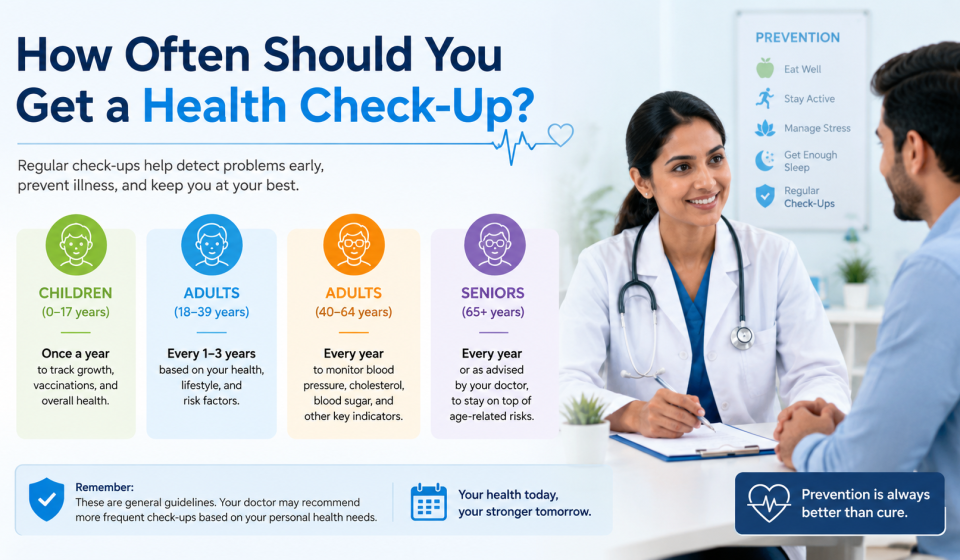
Health Check-Up Frequency by Age
Ages 18–30: Every 2–3 Years
Young adults generally enjoy good health, but this doesn’t mean health screenings should be ignored.
Recommended tests include:
- Blood pressure check
- Body Mass Index (BMI)
- Blood sugar test
- Cholesterol screening
- Vision examination
- Dental check-up
People with risk factors such as obesity, smoking, family history of diabetes, or sedentary lifestyles may need annual check-ups.
Ages 30–40: Every 1–2 Years
After the age of 30, the risk of lifestyle-related diseases begins to increase.
Recommended screenings include:
- Complete blood count (CBC)
- Blood pressure monitoring
- Diabetes screening
- Cholesterol profile
- Liver function tests
- Kidney function tests
- Thyroid function tests
Women should also discuss cervical cancer screening and breast health evaluations with their healthcare provider.
Ages 40–60: Annual Health Check-Up
This age group faces a significantly higher risk of chronic illnesses.
Annual screenings should include:
- Comprehensive physical examination
- Blood sugar levels
- Lipid profile
- ECG (Electrocardiogram)
- Liver and kidney function tests
- Eye examination
- Cancer screenings as recommended
Men may require prostate health assessments, while women should consider mammograms and regular gynecological evaluations.
For example, many individuals discover early-stage diabetes or high cholesterol during annual health screenings, allowing them to make lifestyle changes before complications develop.
Above 60 Years: At Least Once Every Year
Older adults often have multiple health concerns that require regular monitoring.
Important screenings include:
- Bone density tests
- Heart health evaluations
- Vision and hearing tests
- Cognitive assessments
- Diabetes monitoring
- Blood pressure checks
- Cancer screenings
Depending on medical history, some seniors may need follow-up visits every six months.
Health Conditions That Require More Frequent Check-Ups
Certain individuals should schedule health check-ups more frequently than general recommendations.
These include people with:
Diabetes
Regular monitoring helps prevent complications affecting the eyes, kidneys, nerves, and heart.
High Blood Pressure
Frequent blood pressure monitoring can reduce the risk of heart disease and stroke.
Heart Disease
Patients with cardiovascular conditions often require periodic assessments, ECGs, and medication reviews.
Obesity
Regular evaluations help track weight management progress and identify associated health risks.
Family History of Serious Diseases
Those with a family history of cancer, diabetes, hypertension, or heart disease should undergo screenings earlier and more frequently.
Essential Health Tests Everyone Should Consider
Blood Pressure Screening
High blood pressure is often called the “silent killer” because symptoms may not appear until serious damage occurs.
Blood Sugar Testing
Regular testing helps detect prediabetes and diabetes before complications develop.
Cholesterol Profile
This test measures good cholesterol (HDL), bad cholesterol (LDL), and triglycerides.
Complete Blood Count (CBC)
A CBC helps identify infections, anemia, and other blood-related conditions.
Liver Function Test (LFT)
LFTs evaluate liver health and detect abnormalities.
Kidney Function Test (KFT)
These tests assess how effectively the kidneys are functioning.
Thyroid Function Test
Thyroid disorders are common and can affect metabolism, weight, and energy levels.
Cancer Screenings
Depending on age and risk factors, screenings may include:
- Breast cancer screening
- Cervical cancer screening
- Colorectal cancer screening
- Prostate cancer screening
Signs That You Should Not Delay a Health Check-Up
Even if your next routine screening is months away, consult a healthcare professional if you experience:
- Unexplained weight loss
- Persistent fatigue
- Frequent headaches
- Chest pain
- Shortness of breath
- Changes in bowel habits
- Persistent cough
- Abnormal bleeding
Ignoring these symptoms may delay diagnosis and treatment.
Lifestyle Habits That Support Better Health
Regular check-ups work best when combined with healthy habits.
Eat a Balanced Diet
Include fruits, vegetables, whole grains, lean proteins, and healthy fats.
Exercise Regularly
Aim for at least 150 minutes of moderate physical activity per week.
Get Adequate Sleep
Most adults need 7–9 hours of quality sleep every night.
Manage Stress
Practice yoga, meditation, deep breathing, or hobbies that help you relax.
Avoid Smoking and Excessive Alcohol
These habits significantly increase the risk of chronic diseases.
How to Prepare for a Health Check-Up
To get the most value from your appointment:
- Carry previous medical reports
- Make a list of current medications
- Note any symptoms or concerns
- Follow fasting instructions if required
- Share your family medical history
Being prepared helps doctors provide more accurate recommendations.
The Cost of Skipping Health Check-Ups
Many people avoid health screenings because they feel healthy or worry about costs. However, delaying preventive care can lead to more expensive treatments later.
For instance, treating advanced diabetes complications, heart disease, or cancer often costs significantly more than regular screenings and early intervention.
Preventive healthcare is an investment in your future health and financial well-being.
Conclusion
Regular health check-ups play a crucial role in preventing diseases, detecting health problems early, and maintaining overall well-being. While younger adults may only need screenings every few years, individuals over 40 should generally schedule annual health examinations. People with chronic conditions or family histories of serious illnesses may require more frequent monitoring.
Remember, feeling healthy does not always mean being healthy. Many medical conditions develop silently without noticeable symptoms. By making routine health check-ups a priority, you can take control of your health, reduce future medical risks, and enjoy a healthier life for years to come.
FAQs
1. How often should a healthy adult get a health check-up?
Most healthy adults should have a health check-up every 1–3 years, depending on age and risk factors. Adults over 40 are generally advised to have annual screenings.
2. What tests are usually included in a routine health check-up?
Common tests include blood pressure measurement, blood sugar testing, cholesterol screening, complete blood count, liver function tests, kidney function tests, and BMI assessment.
3. Are annual health check-ups necessary if I feel healthy?
Yes. Many conditions such as hypertension, diabetes, and high cholesterol often show no symptoms in their early stages.
4. At what age should regular health screenings become more frequent?
Health screenings typically become more frequent after age 30 and are usually recommended annually after age 40.
5. Can regular health check-ups help prevent serious diseases?
Yes. Early detection through routine screenings can help prevent complications from conditions such as diabetes, heart disease, and certain cancers.